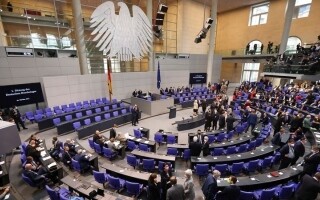
The German government must prioritize correctly for investments to bear fruit: increasing the participation of seniors and women in the labor market, expanding qualification programs, labor market flexibility, and linking the retirement age to life expectancy. A reduction in the corporate tax rate from 2026 was also proposed. The government is under pressure, as the latest poll by 'Infratest dimap' commissioned by German TV channel ARD shows that only 15% of Germans are satisfied with the government, which is a coalition of the Christian Democratic Union, the Christian Social Union of Bavaria, and the Social Democratic Party—the lowest level for this coalition. The government announced major reforms, including a healthcare system reform to reduce costs, after an expert committee proposed saving billions of euros. The Federation of German Industries urged the government to accelerate the pace of key reforms. The federation's CEO, Tanja Günner, stated: 'We need a comprehensive reform package before summer.. Time is short.' She explained that Germany's economic position faces unprecedented pressure since the post-war period, adding: 'The Iran crisis complicates the situation, and if the government now sends a clear signal through structural reforms, Germany can overcome weak growth.' She emphasized that what promotes growth and facilitates private investment must be prioritized, otherwise government funds will lose their desired impact. She noted that the Federation of German Industries has always supported the so-called 'Special Fund' on the condition it is accompanied by comprehensive structural reforms, confirming that 'these reforms have not yet been implemented as required and in time.' A year ago, the German parliament (Bundestag) approved a massive debt package known as the 'Special Fund' of 500 billion euros, to be invested in the coming years in infrastructure and climate protection. Günner expressed hope that the government is now working on preparing a reform package, saying: 'I have sensed a real will within the government in recent weeks to cooperate to achieve this goal. The government can only succeed with a team spirit, which requires a willingness to cooperate across different political directions.' Günner called on the government to reduce labor costs and boost productivity, stating: 'Radical reforms in social security systems are necessary to curb additional wage costs and avoid misdirected incentives. The plans also include reforms in long-term care and pension systems, with priorities also including tax relief through income tax reform, however, the financing for this is still undecided. The fallout from the Iran war is negatively impacting Germany's economic growth, with research institutes projecting GDP growth of only 0.6% in 2026. Since the outbreak of the Iran war at the end of February last year, oil and gas prices have surged sharply. The German economy is already in a difficult situation after years of recession, with many companies hesitant to invest.