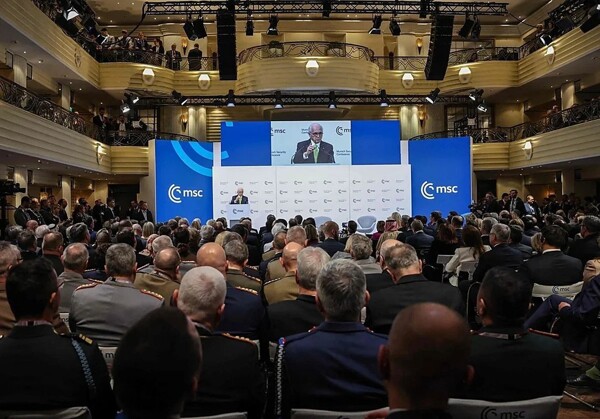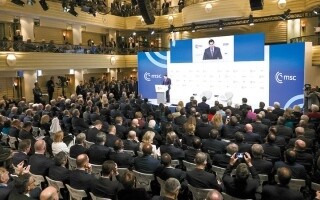
The latest Munich Security Conference highlighted several key issues, most notably the perception of the United States as more cautious, without dispelling allies' doubts about its commitment, and Europe's greater inclination towards self-reliance, particularly in defense. In an interview with AFP, Rachel Elios, Director-General of the Royal United Services Institute, elaborated on these two points. She also noted China's efforts to get closer to Europeans and 'fill the seat being vacated by Washington,' as well as Europeans' lack of conviction that a quick end to the war in Ukraine is possible. According to Elios, after a year of fiery rhetoric from US Vice President JD Vance, the Trump administration sent 'more seasoned' figures, such as Secretary of State Marco Rubio and Assistant Secretary of Defense for International Security Affairs Elbridge Colby, to deliver more measured speeches at the Munich conference. She said the Americans 'clarified that they see Europe as a partner, that they find NATO beneficial, and that they want this partnership to succeed, provided Europeans take the lead.' She noted that Colby made 'very blunt statements' confirming that the US has many responsibilities, Europeans have great wealth, and 'it is time for Europe to take the lead on conventional defense operations within NATO,' adding that 'it is important to stress that they did not say the US is ready to relinquish its nuclear umbrella.' Nevertheless, many Europeans still have questions about the level of trust they can place in Washington. In this context, Elios said: 'I have been in meetings with the Nordic countries, and they remain very concerned about the risk of Trump's renewed interest in buying Greenland and the possibility of other surprises.' According to Elios, German Chancellor Friedrich Merz gave 'a very strong push towards a more European NATO' in his speech. She also noted that British Prime Minister Keir Starmer 'expressed his desire for closer relations with continental Europe and the EU, which I found very bold politically.' She pointed out that French President Emmanuel Macron 'spoke about a European defense, not just a European Union defense, but a more comprehensive defense that includes countries like Norway, Turkey, and the United Kingdom.' She confirmed that 'all this constitutes good steps forward, bringing major European countries closer together for European defense, including on the nuclear front.' However, she pointed to obstacles that must be overcome, namely that France and the UK face poor financial situations limiting their investment capacity, and increasing defense spending agreed upon within NATO takes longer to materialize, in addition to difficulties in implementing defense cooperation projects and other issues. Separately, Chinese Foreign Minister Wang Yi proposed strengthening relations with Germany and 'resuming' relations with Canada, and expressed readiness to provide 'new humanitarian assistance' to Ukraine as it continues its war with Russia. Elios believes Beijing 'will be happy to occupy the seat the US is working to vacate and present itself as a guardian of multilateralism.' She said: 'No one believes this, but the Chinese have shown a very friendly face that could be tempting to some.' She added that Europeans 'are aware of the risks but might be drawn to the economic benefits of a closer relationship with China and may think they can manage the negative consequences, thus making the same mistake the US made years ago.' Europeans do not believe a ceasefire in Ukraine is imminent, and Elios noted that 'the prevailing feeling is that Russia was not sincere about ending the war.' However, she pointed out that many 'tried to counter the narrative that the Russians are winning,' by pointing to their losses for meager battlefield gains, economic decline, and pressure on Russian society. She said: 'This is not a victory in the literal sense.'