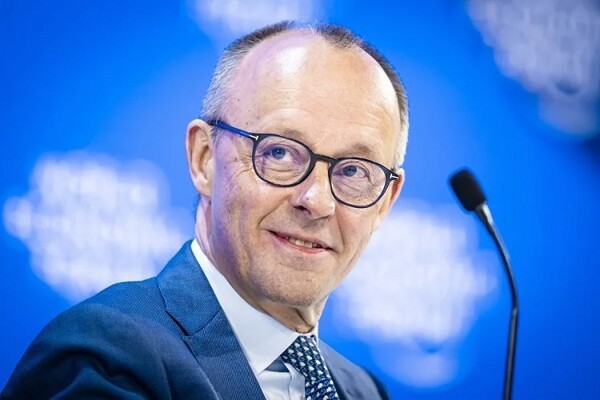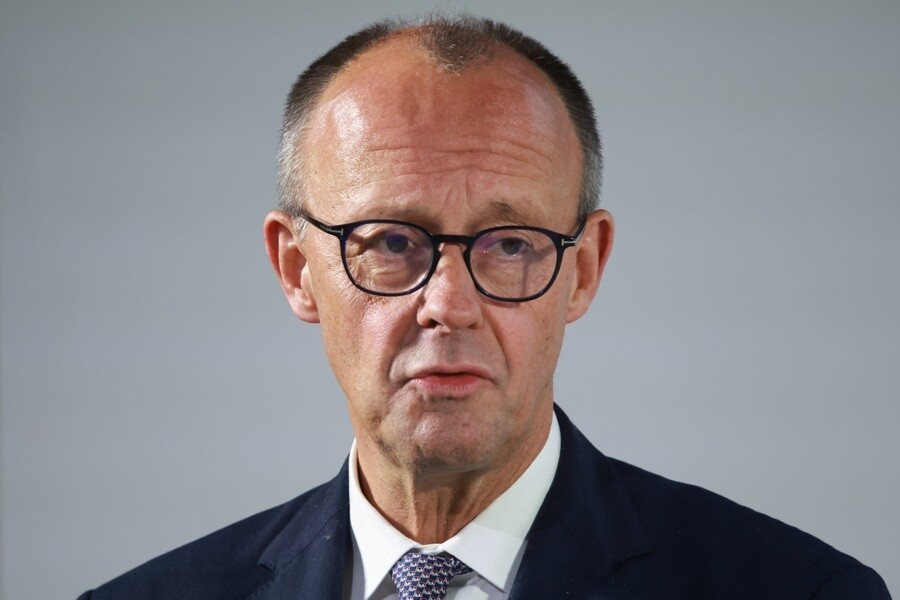
Berlin, Nov 25 (EFE). - German Chancellor Friedrich Merz said on Tuesday that Germany and Europe must assume political and military leadership in the current global situation, which he described as a rupture and the end of an era.
"We must make efforts to maintain the transatlantic alliance and be prepared for the possibility that we may have to confront military aggression," he emphasized. "Those who think the current situation is only about Ukraine have not understood," he added.
Merz recalled that his government took office at a time when the world was already changing in a dizzying way, "with Donald Trump in the White House and an increasingly sleazy populism from the left and especially from the right," he stressed.
The chancellor claimed that his government had created the conditions for an increase in military spending, as other European countries did, fulfilling a long-postponed commitment. Without this, he said, the NATO summit in The Hague would probably have been the last. "If at the NATO summit we had not been in a position to fulfill a promise that we had not fulfilled for years and other countries had not followed us, it would have been the last NATO meeting," Merz said at the congress of the Federation of German Employers' Associations (BDA).
"We got used to eight years of freedom, and what happened in between was not the end of history as (American political scientist) Francis Fukuyama believed, but an episode, and that episode has also ended," said Merz.
"Now we are faced with a brutal reality: war in Europe, authoritarian systems, and a U.S. president who wants to impose his 'America First' through tariffs," he added. "Our children and grandchildren will blame us if we do not find the right answers to the challenges of our time," the head of government emphasized.
Merz implied that given the dramatic nature of the current situation, there are issues that, although they must be resolved, take a back seat to existing challenges. He specifically referred to the debate within his own party, the Christian Democratic Union (CDU), about pension reform.
"In a few years, no one will remember the debate about whether pensions should remain at 48% of the average salary. What they will hold us accountable for is something else," the chancellor said.
He also stated that his government had fulfilled one of the three priorities it had set: correcting refugee policy (achieved with a 60% decrease in new asylum applications), giving a boost to the German economy after two years of recession, and meeting defense commitments. "For us, the situation with the German economy was clear: for years, structures had petrified, leading us to the current situation. If we had not met our defense commitments, the Americans would not have been willing to continue supporting us," he said, referring to the agreement reached among allies to spend 3.5% of GDP on defense and 1.5% on relevant defense infrastructure.
However, he added, in the first months of the government, a reduction in the corporate tax rate was initiated and costs for business energy have been lowered. He also underscored his willingness to carry out reforms in social systems and reduce bureaucratic red tape in Germany and to work for their simplification at the European level as well.
Merz made his speech at a time when his approval ratings are trending downward. According to a poll by the Demoscopic Institute Insa, published on Tuesday, only 25% of Germans are satisfied with Merz's work as chancellor.