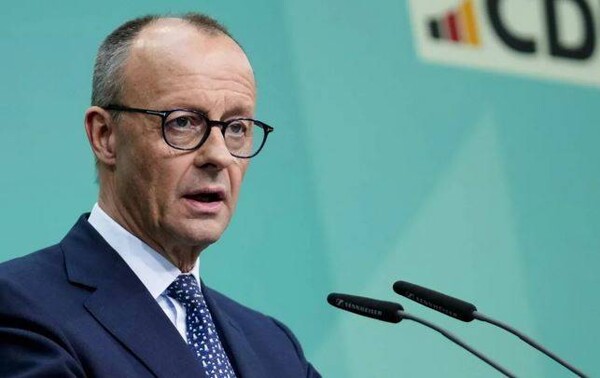
Friedrich Merz was the main rival to former Chancellor Angela Merkel within the conservative Christian Democratic Union (CDU), criticizing her on issues such as refugee policy and energy. When Germans wanted change after 16 years of Merkel's rule and three years under her successor, Olaf Scholz, who continued her policies, Merz seemed to be the man of the hour.
After taking office as chancellor last year, Merz's future looked bright. Polls conducted in June 2025 showed that most Germans were satisfied with his performance, and he ranked as the fourth most popular politician, surpassed only by three members of his government. However, his popularity among voters then declined sharply and rapidly. In a recent poll, he was as unpopular as Scholz, who has held a negative record since such polls began in the 1990s.
German Chancellor Friedrich Merz is remarkably unpopular. According to recent polls, less than a quarter of Germans have a positive opinion of him, and these numbers are falling fast. However, this should not surprise anyone, least of all Merz himself. He came to power less than a year ago on an election platform promising "political change for Germany." Since then, he has avoided tackling crucial reforms. If he thought this was playing it safe, he was wrong. Germans voted for change and expect him to deliver it.
Voters have known Merz for a long time. Before becoming chancellor, he had never held a ministerial post, but was a well-known outspoken conservative politician famous for his pugnacity. Despite these painful setbacks and a sharp drop in popularity, Merz seems to believe that voters fear change and will punish those who call for it. After initially promising an "autumn of reforms" in 2025 to pull the German economy out of stagnation, his party let that promise fade. When a group of young conservatives in his party pushed for a radical reform of the costly and increasingly outdated pension system, he attacked them fiercely.
According to the Telegraph, Merz and his team imposed a strategy of maximum political caution instead of pursuing a dynamic agenda. Recent polls showed that less than a quarter of Germans have a positive view of Merz. Instead of pursuing a dynamic agenda, the German chancellor and his team imposed a strategy of maximum political caution, to avoid breaking anything, and adopted a non-committal tone. Even the far-right Alternative for Germany party, which was eight percentage points behind Merz's conservatives in last year's election, is now neck and neck with them.
Political Caution
What did Merz do to erode voters' trust? Nothing. It's a tactic with stunningly counterproductive results.
Fear for Industry
Take, for example, the regional elections held this month in the southwestern state of Baden-Württemberg. This state has long been under the control of the Christian Democratic Union, except for a 15-year period led by Winfried Kretschmann, the first and only state leader from the Greens to date, who is considered unusually conservative for a member of his party.
As an industrial hub and the heart of Germany's auto industry, Baden-Württemberg is deeply fearful of industrial decline. Polls showed the economy was voters' top concern. It is also an issue voters trust the CDU to handle more than any other party. For this reason, the party was leading the polls by 8% over the governing Greens in January and had every chance to regain control of the state. However, in the elections on March 8th of this year, the party came in second place behind the Greens. The Alternative for Germany party more than doubled its vote share to 19%, its best result in any of Germany's western states, and Merz described the result as "bitter."
A Case Study
What happened in Baden-Württemberg is a case study representing the country as a whole. Germans are concerned about major, contentious issues like economic reform, immigration, pensions, social spending, and security. The Greens fielded a politically savvy candidate, Cem Özdemir, who spoke frankly about all these issues, even if it meant clashing with his left-leaning party. He also represented an alternative to the prevailing cautious politics of the center-left. This was deliberate, as 2026 is an election year when five of Germany's 16 states will go to the polls. Fearing that stirring up voters with bold discussions and proposals would alienate them, the CDU under Merz decided to say and do nothing, hoping for minor victories. That is the problem.