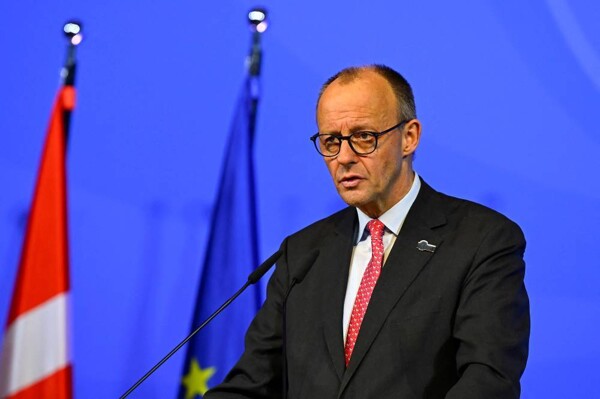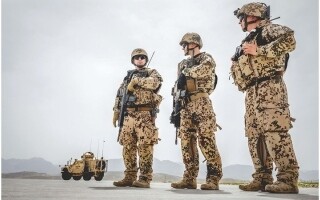
Politicians from Germany's Christian Democratic Union (CDU) and Free Democratic Party (FDP) see the possibility of German military involvement in a mission in Ukraine as not excluded, following a ceasefire agreement within a multinational force. As foreign policy expert for the CDU, Roderich Kiesewetter, told the German magazine 'Der Spiegel', the question of ground troop deployment would only be raised after a ceasefire. However, he emphasized that 'Germany, considering itself a leading state, should not exclude anything from public discourse.' Kieseweter added that Germany should organize what is known as a 'coalition of the willing' with appropriate and broad German participation, legally framed. He stated that the forces of this coalition should also be open to contributions from other parties supporting the stance of NATO and the EU. Meanwhile, FDP politician and chair of the European Parliament's defense committee, Marie-Agnes Strack-Zimmermann, told the magazine: 'Germany must be present in any possible mission to secure peace, and this must be clear to everyone.' She added that the definition of the capabilities to be provided by the German armed forces should be decided by the generals of the participating countries. She pointed out that there are many ways to contribute, 'whether with land forces, air defense, and perhaps also the navy if Turkey allows access to the Black Sea.' She stressed that no option should be ruled out. Next Tuesday, Ukrainian President Volodymyr Zelensky will meet in Paris with leaders of supporting countries to discuss a potential peace agreement with Russia, which includes Western military guarantees to deter new attacks on Ukraine. Several European countries have called for the creation of a 'multinational force for Ukraine' under European leadership. In December, German Chancellor Friedrich Merz did not give a definitive answer on direct German military involvement in Ukraine, noting that the coalition would also include Canada, Australia, and other countries. Before Christmas, the Bundestag's Commissioner for Armed Forces, Henning Otte, outlined basic conditions for creating a peacekeeping force: acceptance by the aggrieved state, a complete ceasefire, and security guarantees to support these forces, as stated by the DPA news agency. In recent days, Russia has continued to shell Ukraine, targeting energy infrastructure, buildings, and other objectives. The Ukrainian president confirmed that his supporters in Kyiv are considering providing further assistance.