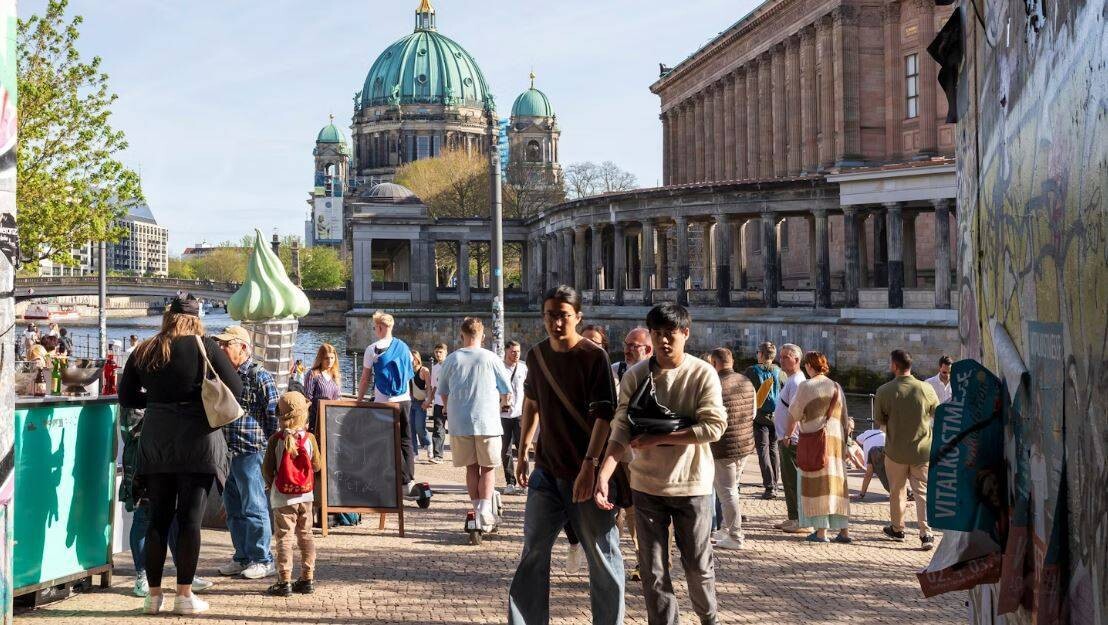
Berlin, the city of Germany, continues to maintain its unique atmosphere, contrasting its historic buildings with modern art. The city, with a population exceeding 3.7 million people, attracts tourists with its museums, parks, and dynamic nightlife. Every year, it hosts concerts and offers a vibrant nightlife scene. According to its attributes, Berlin serves as a hub for technological startups and innovations, which supports its role in the country's economy.
‘Berlin is always alive, don’t try to keep up with the new world,’ — said a hotel guest. This encouragement is likely linked to its complicated history: from the divided halves to the modern era of the megapolis, where the spirit of freedom and creative search is preserved.
This year, Berlin has seen several significant events, including hosting major cultural festivals and opening new musical venues. For example, the annual ‘Berlin Festival’ gathered over 500,000 attendees, showcasing the city's diverse musical scene. The recently opened museum of contemporary art ‘Hamburger Bahnhof’ has also expanded its collection of postmodern works, focusing on audience engagement.‘
‘We strive to maintain the balance between historical legacy and modern challenges,’ — declared the city’s mayor. — ‘Berlin must remain a city where people feel at home, regardless of their origin.’ This perspective helps Berlin preserve its status as one of Europe’s most attractive megacities.'